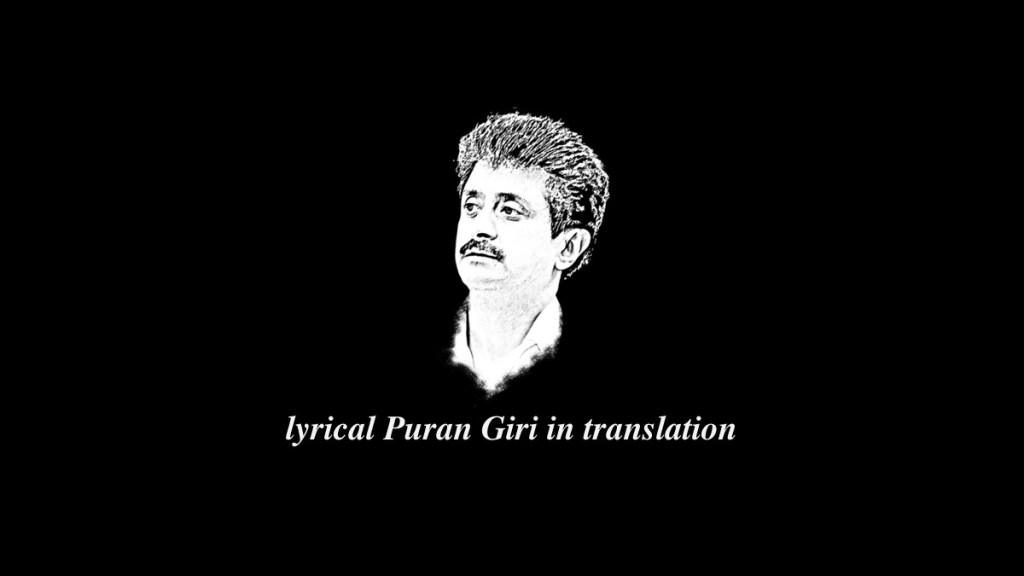
Puran Giri has lent his ink to popular songs and has had a commendable influence for the past three decades. His verses have been widely discussed, and sung. Conformity of subjects cannot be attributed to him for his pen slides through numerous themes, be it love, life, nature or the very question of existence. His reflections and observations dwell upon the facets of the common which are seldom noticed. A translation of his songs by Sahitya Akademi Award winner Manprasad Subba was published under the title Lyrical Puran Giri in Translation. A few sections of this book have been republished here.
Translator’s Note-
Puran Giri, devoted solely to songwriting for nearly four decades, is a busiest lyricist in Indian Nepali music today. He has come a long way since he, as a songwriter, first made his presence felt in the eighties, and nowadays he is the most sought-after lyricist in Darjeeling.
Lyric writing for the purpose of singing has, in fact, never been considered as a serious genre by the poets and litterateurs in Indian Nepali literature. At most, it seems to have been taken as a light creative exercise to be practised only occasionally. Amber Gurung and Gopal Yonjan, two towering composers in modern Nepali music, were, of course, equally great lyricists as well, despite that they wrote songs mainly to meet the needs of suitable lyrics for their musical compositions. But the lyrics written by them have risen to the height of sublime poetic expression.
There are very few who have taken up songwriting as their chosen genre. At this moment, peeping through my memory is the name of Passang Bangbal, now buried under the thick dusty layer of the past, however a closely connected with the name of Amber Gurung of those days when the latter was in the early stage of his career as a singer and musician. Passang Bangbal, said to have lived in abject poverty all his life, wrote, in the fifties of the last century, dozens of popular numbers for Gurung, then ascending towards fame as a composer and singer. He wrote nothing else but songs. Although his name seems to have slipped into oblivion, his contribution to the Nepali songwriting can in no way be ignored.
The seventies and eighties found an excellent lyricist in Norden Rumba who was basically a poet of modernist trend but during the short span of his life he wrote more songs than poetry. The music fraternity of Darjeeling felt a sort of void when death snatched their favourite lyricist away. Another noted name, coeval with Norden Rumba, is Jas Yonjan Pyasi who has penned as many songs as his poetry. Publication of his songs in two volumes,dozens of them composed by celebrated musicians and sung by popular singers, amply bear the testimony of his sincere love for this genre.
“Passang Bangbal, said to have lived in abject poverty all his life, wrote, in the fifties of the last century, dozens of popular numbers for Gurung, then ascending towards fame as a composer and singer. He wrote nothing else but songs. Although his name seems to have slipped into oblivion, his contribution to the Nepali songwriting can in no way be ignored.”
Puran Giri is, of course, inspired or encouraged in one way or the other by these immediate predecessors of his and it is only natural if we trace some impressions from them in his lyrics. However, keeping pace with time, he has evolved the style of his own. Now a professional songwriter, he has brought out in book form two volumes of his selected lyrics all recorded with the music composition of popular and celebrated musicians and sung by various singers from different places. Themes of his songs range from love and loneliness to joy and bereavement, from wine and woman to worldly ways and wilderness, from patriotism and nationalism to social and moral degeneration, from nature’s beauty and laws to common human flaws. However, one recurrent theme in his lyrics, as in most of other songwriters, is the love expressed in diverse ways. We can see in his love-lyrics the inexhaustible exploration of love. The lyrics on universal concern like world peace, environment, displacement of human beings and some others on the general theme of mutual co-operation and undaunted spirit refusing to be defeated by the sufferings show his heightened poetic sensibilities.
Puran Giri’s noble desire to reach out to the wider audience beyond the boundary of Nepali-speaking people has given birth to this English version of his songs. When he came up with manuscript to repose his confidence and trust in me, I, in spite of my being in constraint of time, could not but accept the assignment. But unforeseen circumstances and some other reasons kept coming in my way and the manuscript lay untouched for more than a couple of years. It was only in the beginning of March, 2018 I started working on it and by the time I finished the last line of the last page, the first fortnight of April 2018 had already come to a close.
Translating a lyric with rhyme and rhythm from one language into other language is a challenge in real sense of the term. A lyric, or a poem for that matter, is not only what is expressed in it, but more than that, it is how it is expressed. And this very ‘how’ bears in it all the subtle lyrical elements which pose extreme challenge to the translator. Some typical elements are even impossible to be rendered into other languages. If these lyrical elements, while translating, are not taken care of, a translation may sound mere a prosaic. Translation in lucid prose form, though shorn of rhyme and rhythm, too, can amply convey the subtleties of a lyric. Here in this book of translation, readers will find most of the lines moving in various rhyming schemes and rhythmic patterns which came almost by themselves. There are also the lines that simply or defiantly wanted to remain as whatever they are, without being harmonized with the scheme employed. Translation of these songs would have seemed to be more faithful if done in prose forms. But I opted otherwise as I was drawn more by the lyrical sounds than their contents. And resultantly, line and stanzas in several songs have been remade and recreated to make the translation more palatable while remaining faithful to the contents and structures, images and similes and symbols beautifully imagined and deftly employed in the songs by the lyricist. So, in the light of these facts, this work of translation may even be seen as standing in the proximity of ‘transcreation’. I will feel richly rewarded if these songs in their English version serve the purpose of what they are actually meant for.
I would like to thank Puran Giri for entrusting me with the task of translating these songs that gave me real pleasure and added to my experience of doing such work. I wish him greater success in the days to come.
Manprasad Subba
May 03, 2018
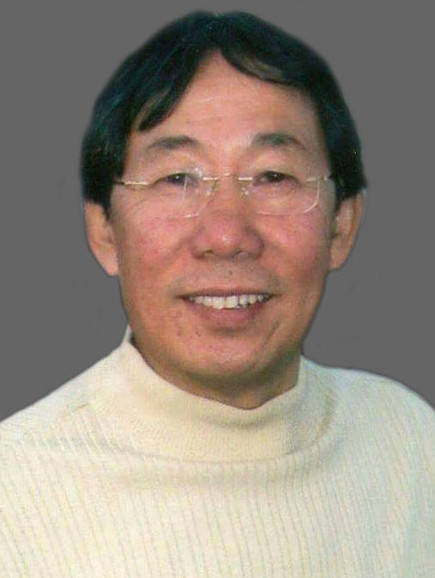
Three songs with its translations have been republished here.
First song- Sharanaarthee or Refugee.
शरणार्थी
न शिर ढाक्ने छानो नै छ
न खुट्टा टेक्ने धरती नै छ
यति ठूलो संसारमा
न मान्छे नामको मान्छे नै छ ।
न मन खोल्ने ठाँउ नै छ
न सागर तर्ने नाउ नै छ
यति ठूलो मानचित्रमा
न आफ्नो एउटा गाउँ नै छ ।
न घाउमा कुनै मलम नै छ
मुटु सबको फलाम झैं छ
यति धेरै ज्ञानीहरूमा
न बोलिदिने कलम नै छ ।
न सीमा नाघ्ने बाटो नै छ
न मरुँ भने माटो नै छ
शरण परुँ कसको परुँ
देवता सबै ढुङ्गा नै छ ।
Refugee
No roof over the head
Nor earth to stand on
In such a vast world
None is there as human
No space to lay bare one’s heart
Nor a boat to cross the sea
In such a vast globe
No place for a soul to live
No balm is there for the wound
Every heart is like iron cross
So many wise people are there
But no one to speak for us
No path to take us across the border
Nor a piece of land to rest forever
Who to take refuge to?
All gods are like boulder.
Second song- Shanti Sabha or Peace Convention.
शान्ति सभा
(शान्तिको शंख बज्यो आकाशको गर्भबाट
मारकाट रोक्ने बिन्ती गर्दछन् स्वर्गबाट)
आकाशमा ताराहरूको जुलुस
जूनले चिच्याई नारा लाएको
धरतीका निर्धा निमुखा मानिस
रमिता हेरिबसिरहेको ।
आपसमा दाजुभाइ छुरीको धारमा पर्दा
भागदौड़मा एउटै भाको आमाको छोरो मर्दा
मानवता हराएको थाहै नपाई खबर पुग्दा
सौरमण्डल सनसनी भई सभा डाकियो
आकाशमा … … …
संसार वरिपरि अशान्ति छायाँपर्दा
छायाँकै अँध्यारोमा प्रेमभावको दीया मर्दा
दानव यो बजारको जगजगी साह्रै देख्दा
सौरमण्डल सनसनी भई सभा डाकियो
आकाशमा … … … ।
Peace Convention
(From the sky’s womb conch shell of peace sounded:
A heavenly concern over the killings of each other)
The stars rallying in the sky
The moon shouting slogans
Down on earth hapless earthlings
Looking at the fearful spectacles
Earth’s offspring stabbing each other
Seeing a mother’s only son being slain
And humanity vanished God knows when
An emergent convention was held in the Heaven
World is wrapped in chaos and confusion
That has snuffed the lamp of compassion
Seeing this unrestrained devilish bazaar
An emergent convention was held in the Heaven
Third song- Akshamy or Unpardonable.
अक्षम्य
यति धेरै सतायौं सबलाई
त्यसको कुनै हिसाब छैन
माफी मांंग्छौ भने पनि
कानूनन त्यसको किताब छैन ।
पश्चातापको चितामा जलेर पनि
खरानी हुन सक्तैनौं
गङ्गाको पानीले धूए पनि
पाप पखाल्न सक्तैनौं
तिमीले शीर नै झूकाए पनि
तिमीले पाउने इन्साफ छैन
माफी माग्छौ … … … ।
समुन्द्र मन्थनको अमृतले पनि
जीवन दानमा लिन सक्तैनौं
स्वर्गको खुल्ला ढोकामा पनि
पाइला बढ़ाउँन सक्तैनौं
कस्तो श्राप पायौ तिमीले
जसको कुनै तोड़ छैन
माफी माग्छौ … … … ।
Unpardonable
You caused to all so much distress
That is beyond accounts
Even when you begged for mercy
No legal way is found
Even if you burn in the fire of remorse
You can not be burnt to ash
Even if you take bath in the Ganga
Your sins cannot be washed
You bow your head in supplication
But there’s no reprieve for you
Even when you begged for pardon
No door opens for you.
Even with nectar churned out of the sea
You’ll be unable to save your life
And after death you won’t find the path
That leads to the door of paradise
You are now under such a curse
Remedy of it can never be found
Even when you begged for mercy
No bell of reprieve will sound.
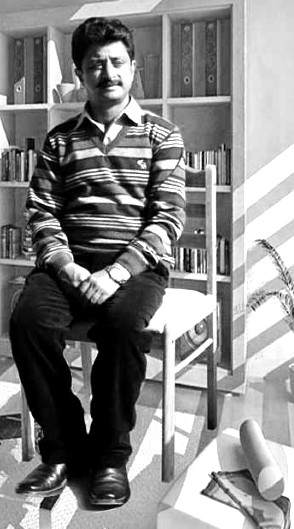
Excerpts of the book have been republished here with permission from Dr. Indraman Rai Sahitya-Kala Pratisthan, the publishers of this book.
 THE KAKU